PROBEROS
PROBEROS LF160 kabura jig slider 100g-300g w morzu na Tuńczyk Strzępiel Pagr
PROBEROS LF160 kabura jig slider 100g-300g w morzu na Tuńczyk Strzępiel Pagr
Nie można załadować gotowości do odbioru
Why Choose PROBEROS? Delivery time?
Why Choose PROBEROS? Delivery time?
🚚 Fast, Free Shipping on Orders Over $100
Total estimated delivery time includes order processing time (1-5 business days) and transit time:
• Standard Shipping: 7-20 business days
• Expedited Shipping: 7-10 business days
Sit back and relax while your package is on its way!
🛡️ 30-Day Money-Back Guarantee
Get a full refund when you return your undamaged products within 30 days - for any reason. Once the item arrives back at our warehouse for inspection, the refund process will begin.
✉️ Lifetime Customer Support
We'll always be there for you.
If you have any questions or concerns, feel free to contact us at sales@proberos.com

PROBEROS LF160 Kabura Slider Jig, 100g to 300g
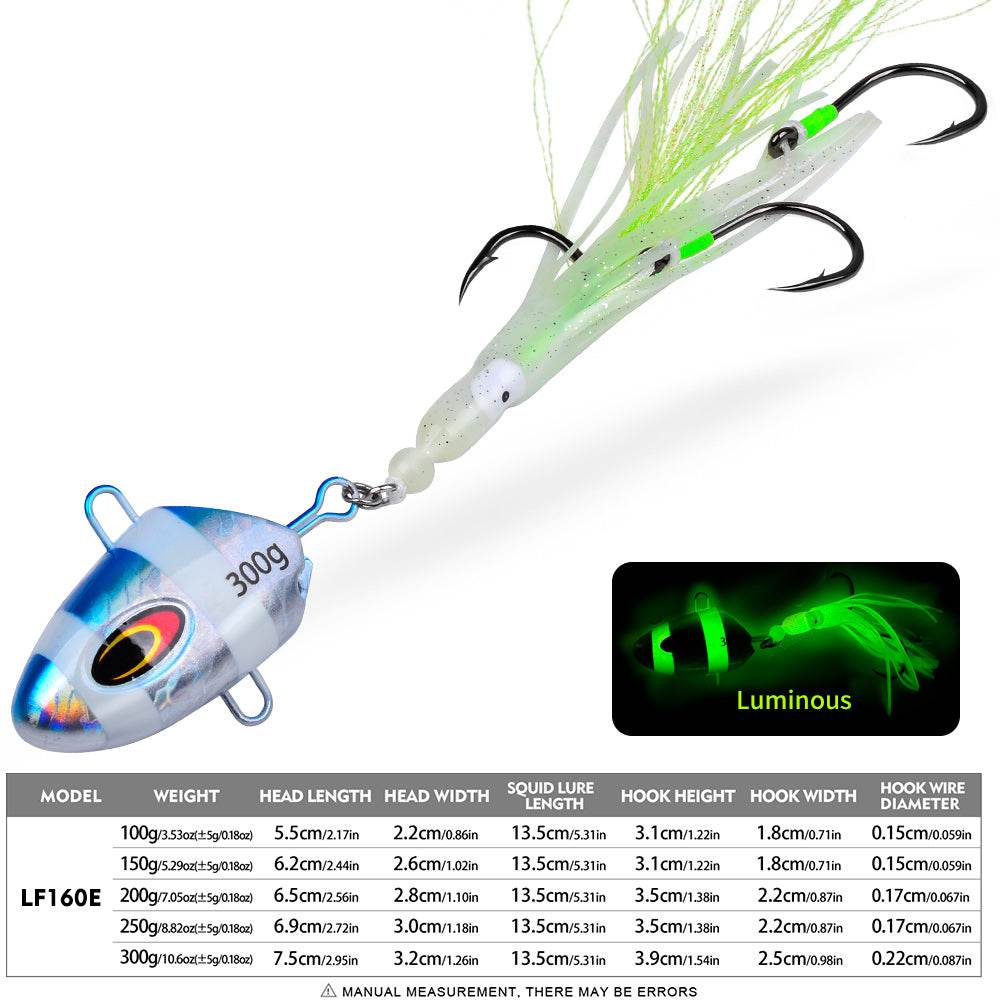
The PROBEROS LF160 Kabura Slider Jig is built for a slow lift and drop, or a dead-stick hover in saltwater and comes shown rigged with a hand-tied feather assist hook. It is available in 5 weights from 100g to 300g, so one lure family covers deep drops and heavy current without changing lures. The body is high-density lead head finished with a high-contrast finish, in 5 colour options chosen to match local bait, light and water clarity. It is aimed squarely at Tuna, Amberjack, Kingfish, Snapper.
Size & Weight Specifications
| Weight | Length | Recommended Application |
|---|---|---|
| 100g | 5.5 cm | Mid-depth reefs and wrecks, 40-80 m |
| 150g | 6.2 cm | Deep reefs and current edges, 60-120 m |
| 200g | 6.5 cm | Deep drops, 100-200 m, big pelagics |
| 250g | 6.9 cm | Deep drops, 100-200 m, big pelagics |
| 300g | 7.5 cm | Fast deep drops, 150-300 m plus, heavy tackle |
Design, Finish & Build
- Body and core: high-density lead head in 5 weights from 100g-300g, built to sink true and stay stable through the fall.
- Finish: a high-contrast multi-layer paint job, across 5 colour options (A, B, C, D, E) to match bait, light and water clarity.
- Hardware: sharp triple assist hooks + silicone squid skirt with feather as standard.
- Attractor: a soft squid-style skirt that pulses, flares and holds water on the drop so the lure stays in the strike zone longer.
Usage Scenarios & How To Fish It
- Drift fishing for reef species with the jig nudging the seabed
- Deep structure fishing where a horizontal presentation matters
- Boat and rock ledge fishing over broken ground
- Bottom bouncing over sand, gravel and reef edges
- Technique: work the jig with a slow lift and drop, or a dead-stick hover. Let it fall with a slow, upright descent to the seabed on a slack line, then take up the slack before the next lift.
- Tackle: PE 5.0-8.0 braid and a 100-150 lb fluorocarbon leader, with a rod rated for the weight you are fishing.
- Heavy-water tip: keep the rod loaded and pump rather than crank, and re-tie the leader after every serious fish.
Target Species
Sized from 100g to 300g, this kabura slider jig is aimed at big pelagics and deep-water bottom fish: Tuna, Grouper, Snapper, Kingfish, Amberjack, Halibut, Cod. Fish the lighter end of the range over pressured inshore ground and the heavier end when you are dropping into current over deep structure.
Local Names & Regional Playbook
- USA, Canada & Australia: fished as a kabura slider jig or bottom jig, drifted over reef and sand with the head tapping the seabed. Prime targets: Tuna, Grouper, Snapper, Kingfish, Amberjack.
- Europe (UK, Ireland, Norway, Germany, France): a proven pattern for deep-water boat fishing and fjord jigging. Prime targets: Halibut, Cod.
- Japan: a metal jig for boat jigging and slow jigging, locally called a metaru jigu. Prime targets there: Maguro, Buri, Hiramasa.
- Korea: a metal jig for boat jigging, locally known as jigging. Prime targets there: Chamchi, Bangeo, Bushiri.
Hand-Tied Assist Hook Rigging
The jigs are rigged as pictured with a hand-tied feather assist hook, ready for the drop.
Every PROBEROS assist hook set is tied by hand, never crimped together by a machine. A high-strength PE braided main line is knotted down onto the hook shank, then wrapped with fine binding thread in 80-100 tight turns, locked with adhesive, and flash fibers are laid in during the wrapping so the leader reflects light and keeps moving in the water. Every finished set is built to hold 150 lb or more: even if the hook is straightened or snapped under load, the tied leader will not slip off the shank. That is the difference between landing the fish of the trip and losing it at the boat. Match the hook size to the jig weight and to the fish you are chasing.
Frequently Asked Questions
Which weight should I choose?
Match the weight to depth and current rather than to the size of the fish. This listing covers 100g through 300g: fish the light end in 10-30 m and over pressured fish, and the heavy end when you are dropping into 100 m plus with current running.
Is the assist hook included?
The jigs are rigged as pictured with hand-tied feather assist hooks. If you would rather run your own hook, message us and we will sort out a bare-body option for you.
How do I work this jig?
Let the jig reach the bottom or the target depth, then use a slow lift and drop, or a dead-stick hover. On slow pitch gear one long lift followed by a controlled fall does most of the work, so keep the line just tight enough to feel a take on the drop.
Will it hold up in saltwater?
Rinse the jig in fresh water after every session, dry it fully and store it out of direct sun. Check the split ring and the hook point each trip, and swap the assist hook once the point rolls over or the leader starts to fray.
Care & Storage
Rinse with fresh water and dry after every saltwater session, check the split ring and the hook after heavy structure contact, and store the jig in a box rather than loose in a bag so the finish stays sharp.